13 Jul Chaise Longue and Neck Tie
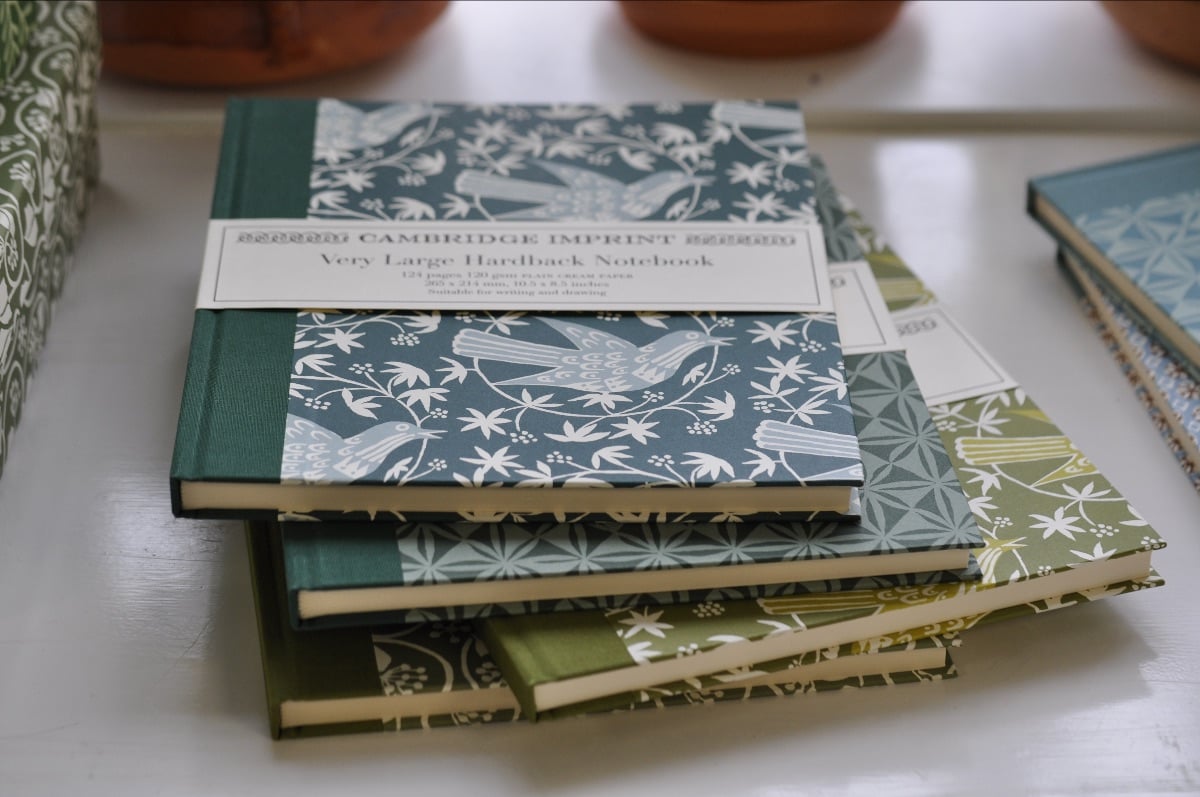
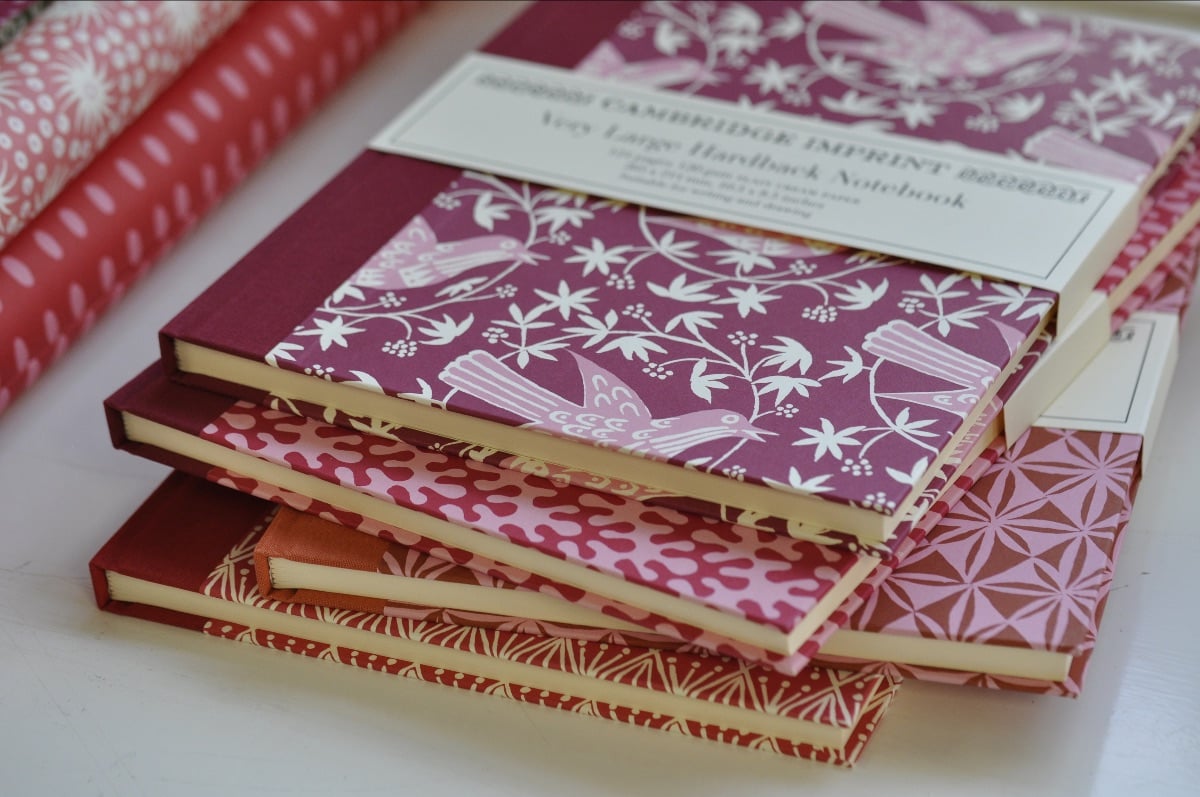
We last wrote from a sorry, sodden, bedraggled and frozen February Cambridge. Since then the outlook both foreign and domestic has continued to deteriorate, but the weather has improved no end. We enjoyed an exuberant spring of the very best kind—sunny and clear in the daytime, cool breeze at night—and now the pendulum has swung still further, as pendulums so often do, past the point of maximum comfort and into the realm of Too Much of a Good Thing. We hope for the temperature to fall a little so that we can enjoy the superabundance of wildflowers and the rioting roses instead of cowering inside in the shade. Happily we seem to have an overflowing of fecundity here in the studio too, with lots of projects, long in the bud, blooming right now. In particular, we are delighted to announce that our beautiful new Very Large Hardback Notebooks have arrived in time for some sketching en plein air, just as soon as the stifling heat allows.
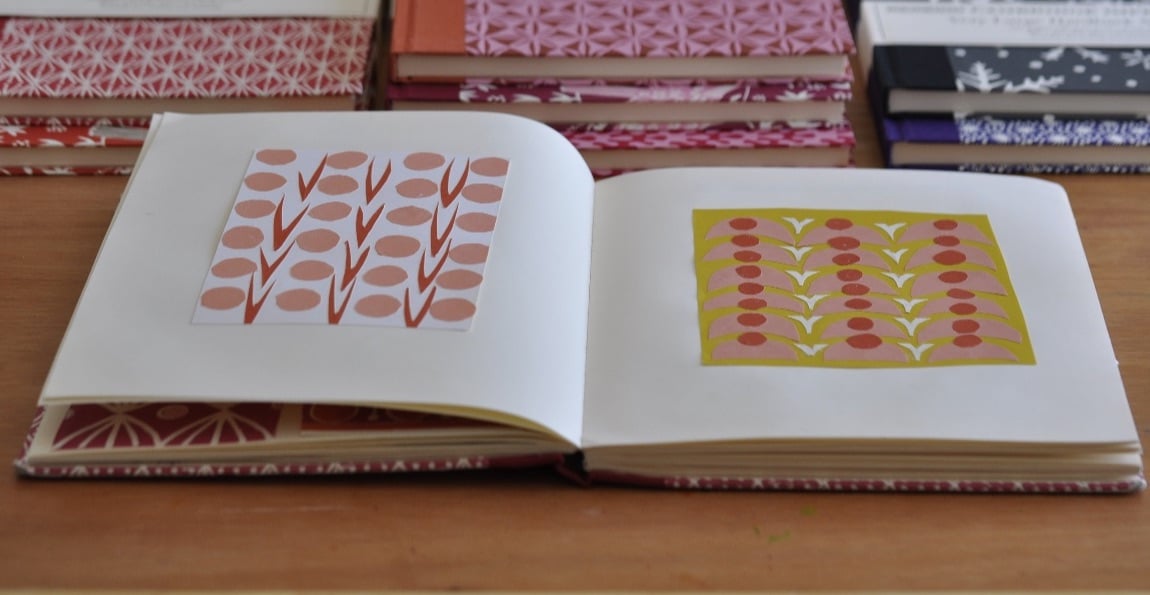
As a general rule, our products are created to satisfy ourselves, and happily we have found that on the whole, if there is an item we can imagine but are unable to find, other people also feel that lack and will buy it if we make it. We made a few prototypes of a very large notebook years ago and have been using them ourselves ever since. They had 80 pages of nice, fairly thick 120 gsm smooth ivory paper, casebound with good strong boards covered in our patterned paper and a coordinating book cloth spine. They are designed to withstand—nay, to positively embrace—wear and tear, to be carried around, to be drawn and written in, to have things stuck in and to get better-looking as they accumulate the patina of use.
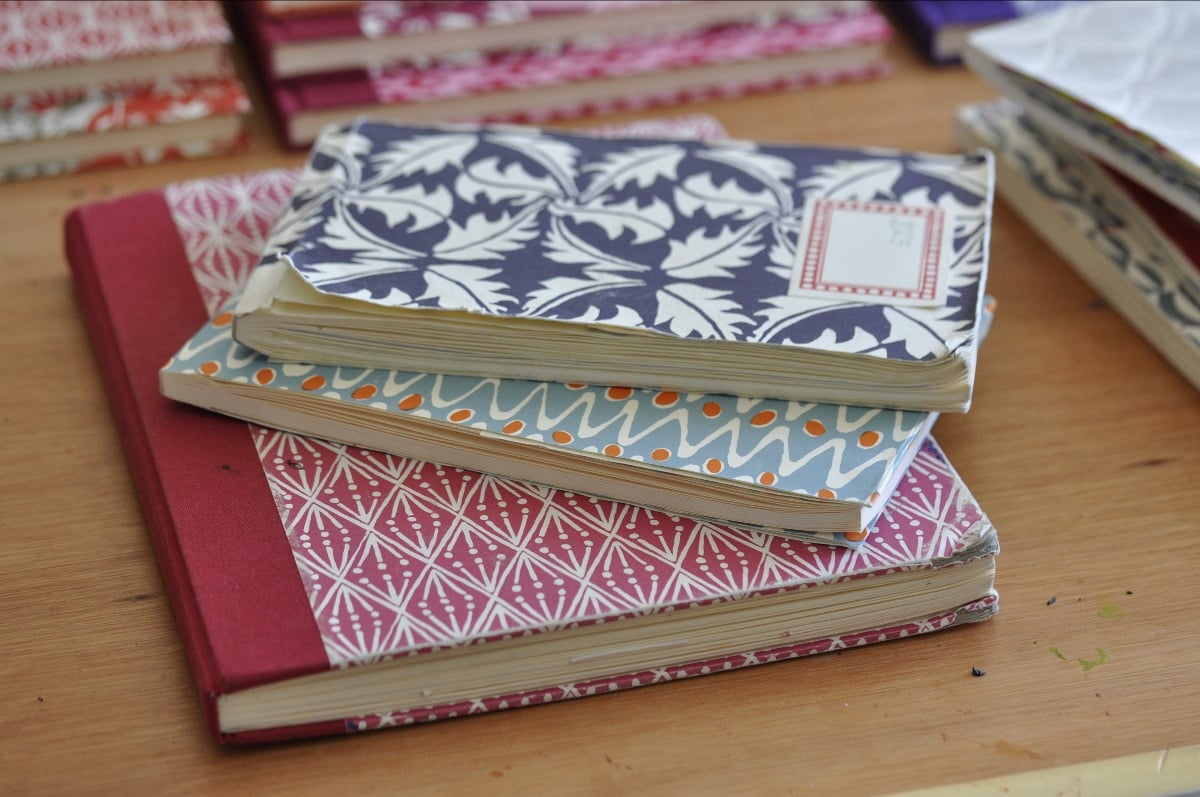
Here you can see a well-used example, with very few empty pages remaining. After several years of use to the point of destruction, we have decided they deserve a wider audience, as well as urgently needing some new ones ourselves. So just in the nick of time, from our point of view, we are launching the Very Large Hardback Notebook in a range of 16 patterns.
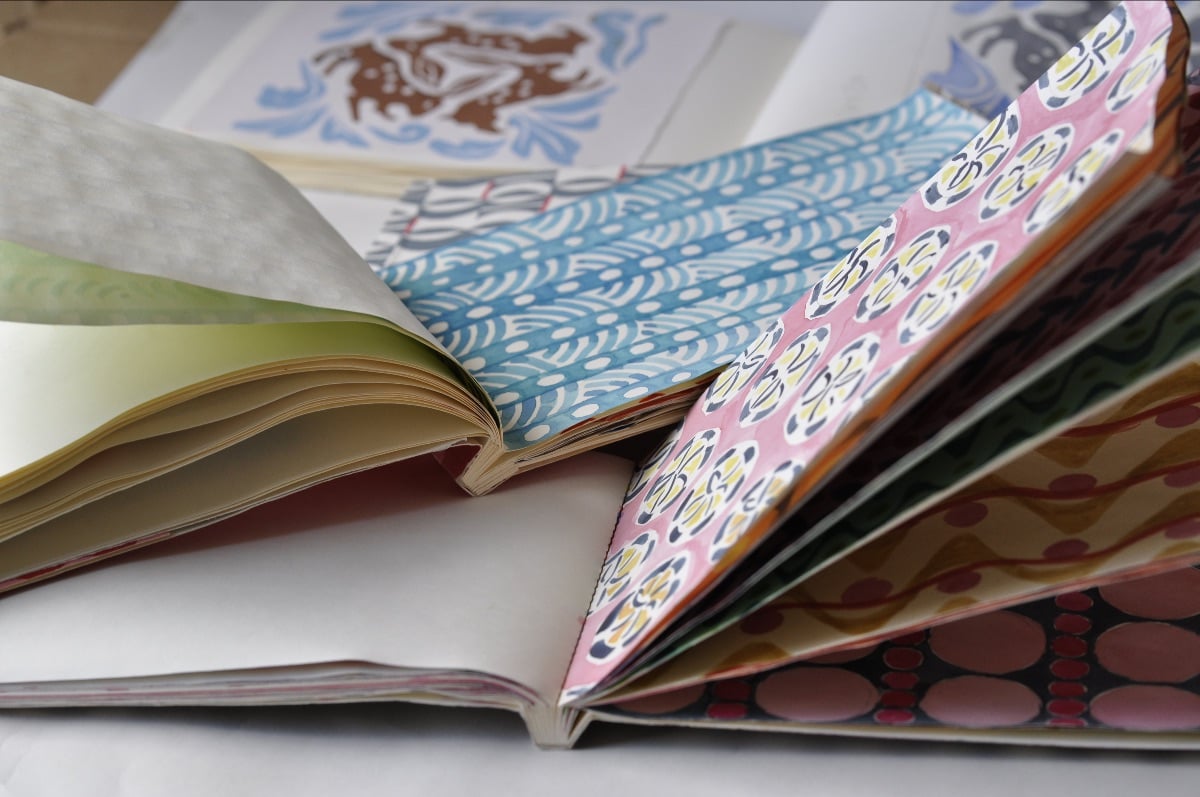
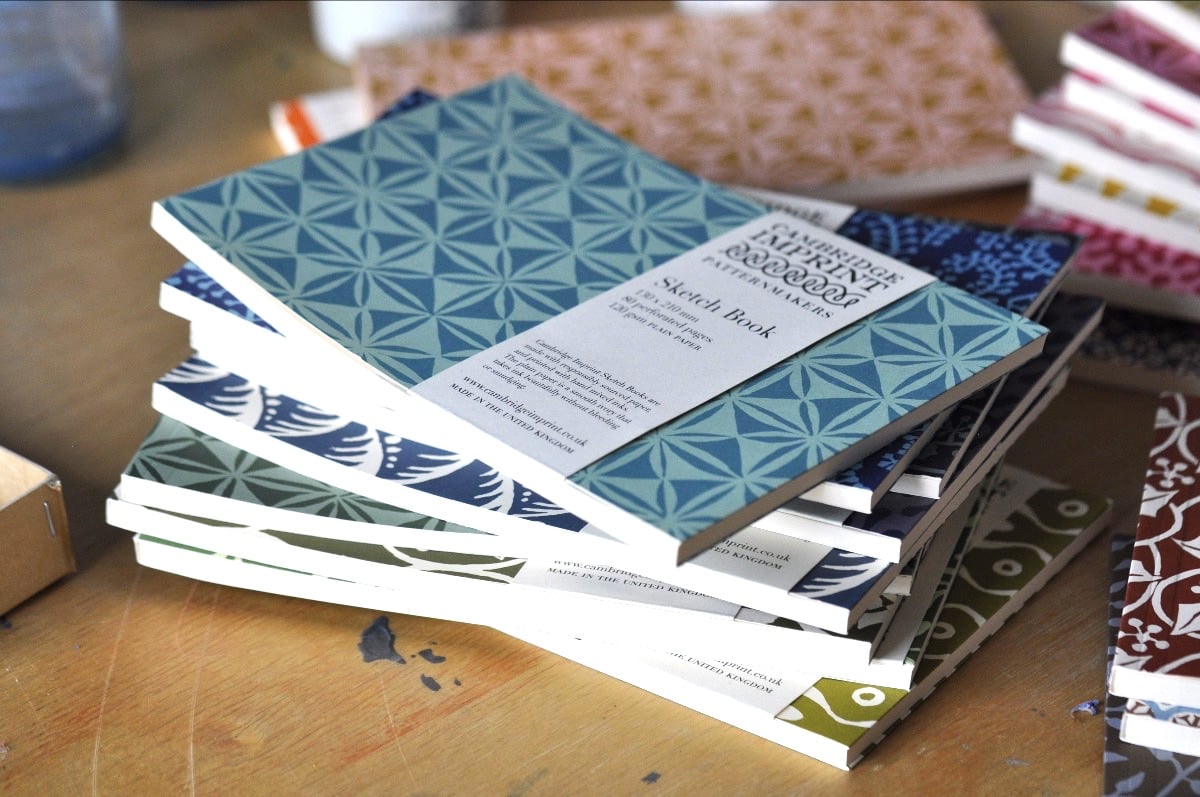
We made our softback sketchbooks to suit ourselves too, and suit us they do. We all use them everyday. They too have 120 gsm plain ivory pages, they’re a neat landscape format that is easy to carry around and the pages are perforated for easy removal. If drawing and sketching is your thing, may we recommend? A delivery of softback sketchbooks has also just arrived from the binder in a wide range of new patterns.
We spent the late spring happily reproducing two Enid Marx patterns to coincide with an upcoming exhibition of her work at Compton Verney. We knew Marx was a designer of excellent patterned papers in the Thirties. But more interesting to us now, because we hadn’t previously been quite so aware of them, are her very free early textile designs. One of the patterns we were particularly struck by is on this marvellous hand block-printed chaise longue:
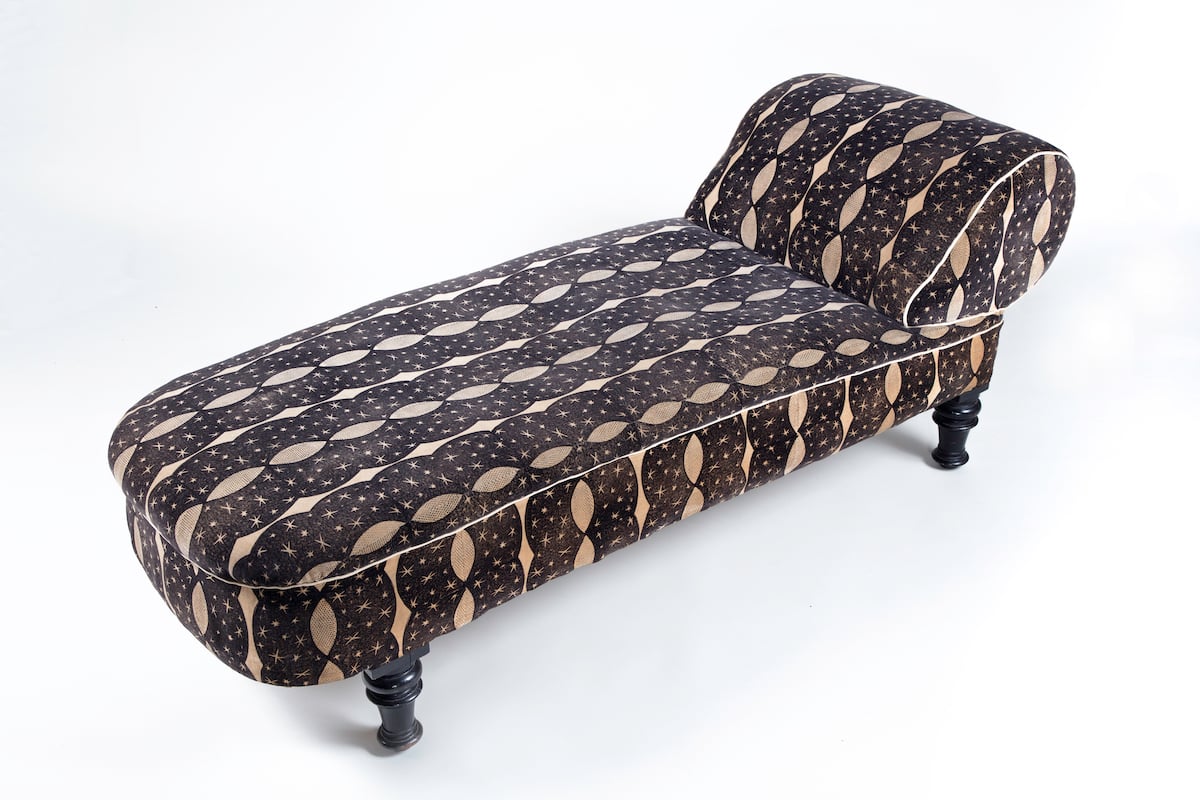
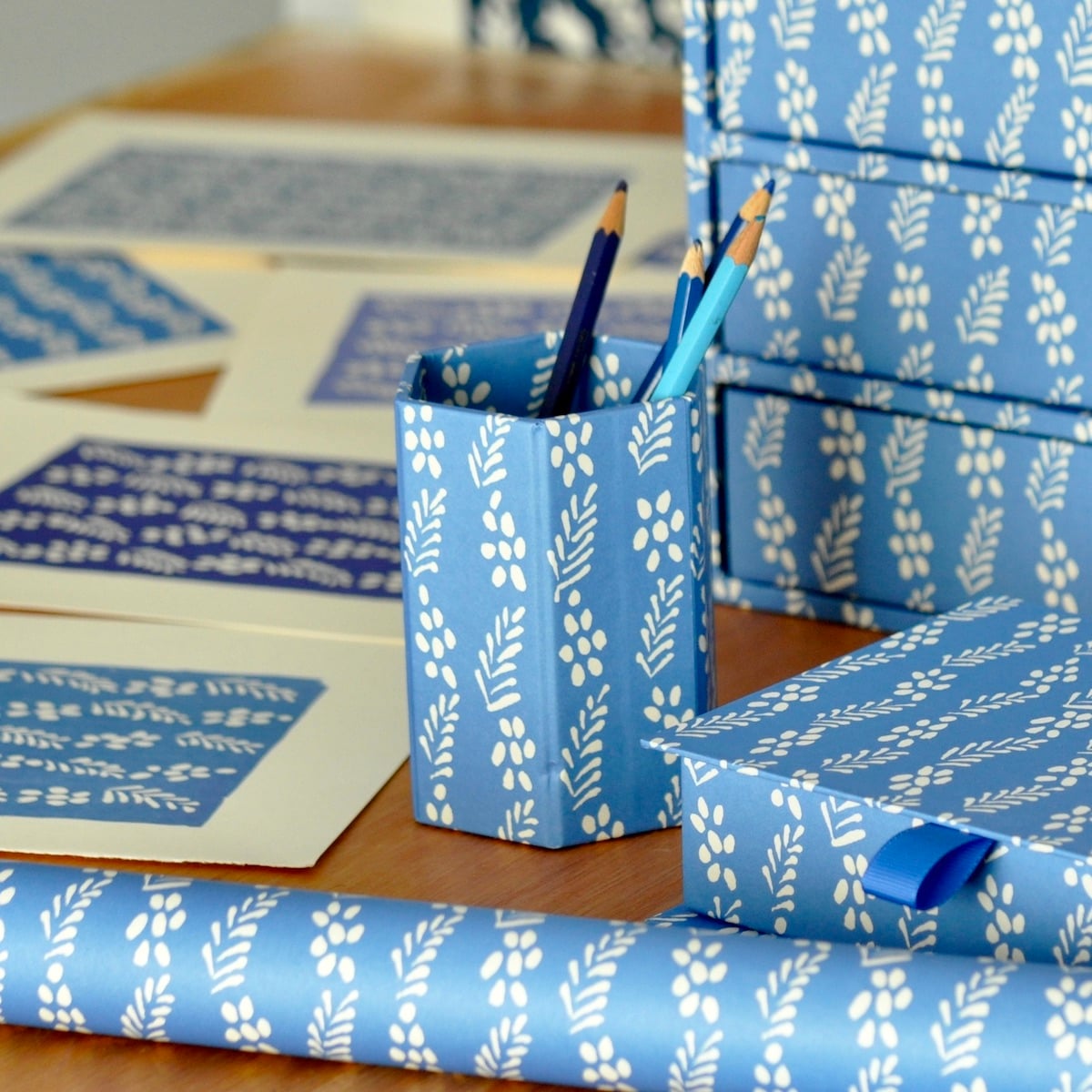
The other pattern we chose to work with is from a minute fragment of blue cloth preserved in the form of a neck tie:

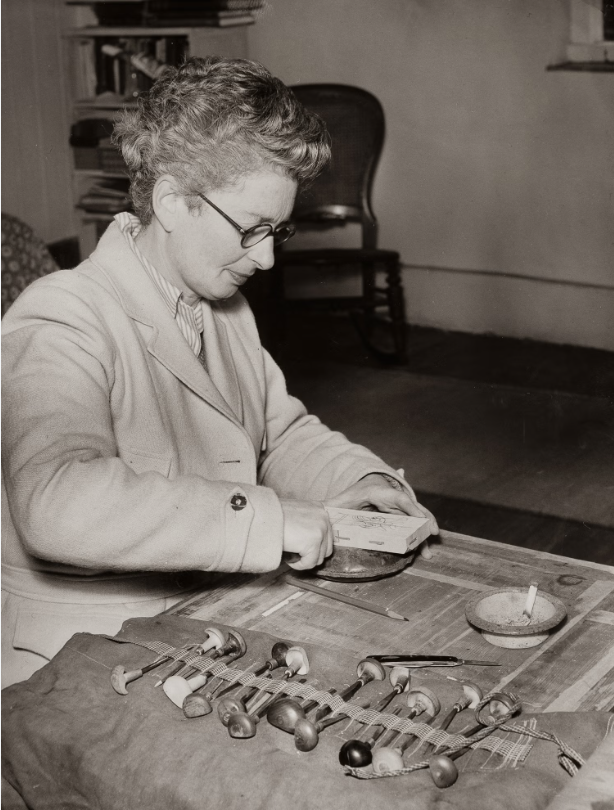
Enid Marx, always known as ‘Marco’, was a contemporary and friend of Edward Bawden, Eric Ravilious and Peggy Angus at the Royal College of Art, and later an apprentice of innovative textile block-printers Phyllis Barron and Dorothy Larcher in the mid-1920s. She was a versatile illustrator, a printmaker, and a designer of book jackets, stamps and all sorts of ephemera, as well as the aforementioned patterned papers, which were designed for and printed by the Curwen Press. She was fascinated by English popular art, and together with her partner Margaret Lambert assembled an important collection. She is probably most famous for designing, in 1937, an industrial textile: a pattern for the seats on the London Underground which continued to be used for decades. These two exuberant yet delicate hand-printed textiles are our favourite things in the upcoming exhibition, and what we chose to reproduce.
Alas, we cannot pretend to have heroically delved around in the archives. We would like to report on our treasure-seeking; a bit of honourable toil and dusty endeavour; a feeling of spiritual communion with a personal heroine. In fact we were sent in a modern, effective, but not very romantic way lots of images of items that were to be in the exhibition, from which these two patterns leapt out at us as positively requiring to be resuscitated. Thus digital convenience somehow simultaneously improves and impoverishes our lives.
We went to Compton Verney before finalising the colours, to check the blue of the neck tie and the black of the chaise longue with our own eyes. The chaise turned out to be in storage, to be unveiled at the exhibition, and the neck tie was just able to be glimpsed at the back of a cabinet which could not be opened because the key could not be found. However, the curators very kindly showed us all sorts of other bits and pieces from the Marx archive, so in the end we did get to do a bit of delving.
Compton Verney is a big elegant country house near Warwick, set in a beautiful park landscaped by Capability Brown, complete with lake, exceedingly photogenic sheep, sculpture park, lawns, terraces, vast cedar trees, and so forth. The house is stuffed with good paintings and interesting collections. In particular, it has rather wonderful Folk Art galleries on the top floor, as well as being the permanent repository of Marx’s own archive and the Marx/Lambert collection of Popular Art.
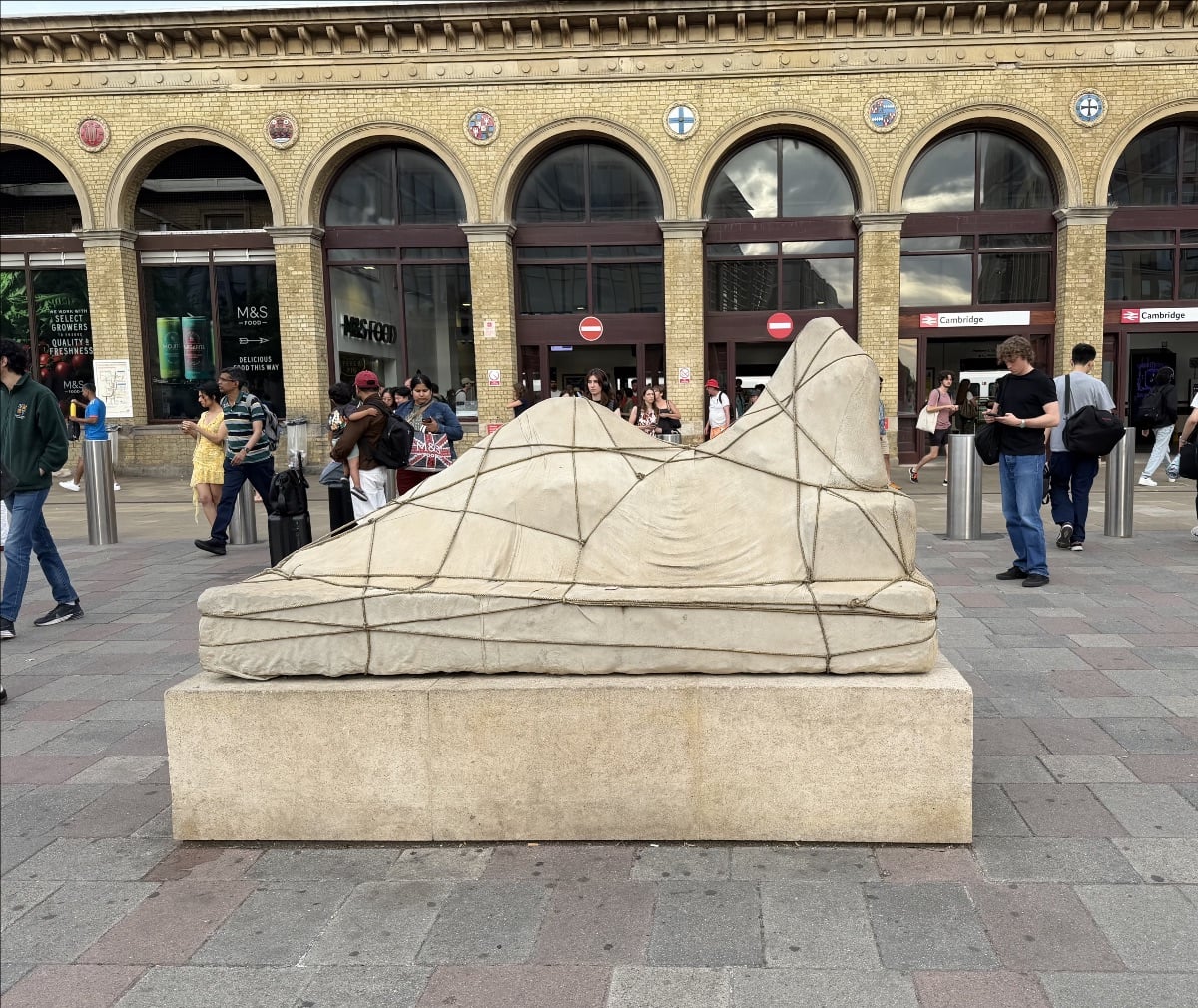
The Capability Brown grounds are very lovely. In some instances we were not convinced that the rather serious and important contemporary art dotted about here and there outside is truly an enhancement. To be fair, enhancement isn’t the point of the endeavour: it’s all much more educational and thought-provoking than that. Perhaps I have become jaded by overexposure, and no longer wish to have my thought provoked. Cambridge, a mostly beautiful city, at least in the centre, is also afflicted with occasional outbreaks of art which are said to be in dialogue with their environment: questioning this and subverting that. I am thinking particularly of the statue Ariadne (Wrapped) immediately outside Cambridge station, which I see a couple of times a week and which makes me peevish. AI tells me that it is ‘a precious parcel, forever in transit, which plays with the constant movement and transit of a railway station’ and enumerates the various clever art historical references it embodies (de Chirico, Christo). It looks like a reclining woman tied up with tarpaulin and rope and reminds me of the bodies found in suitcases at the left luggage office in murder mysteries from the 1930s. Most people I have mentioned it to were unaware that it was a statue, taking it instead for unfinished roadworks. It’s rather a good location and it feels like a missed opportunity for…well, for decoration and for pleasure. The concrete satisfactions of the physical world instead of (or ideally as well as) the more abstract satisfactions of the intellect. Decoration is an art form in its own right, as Enid Marx and her early 20th century Royal College contemporaries understood and took appropriately seriously.
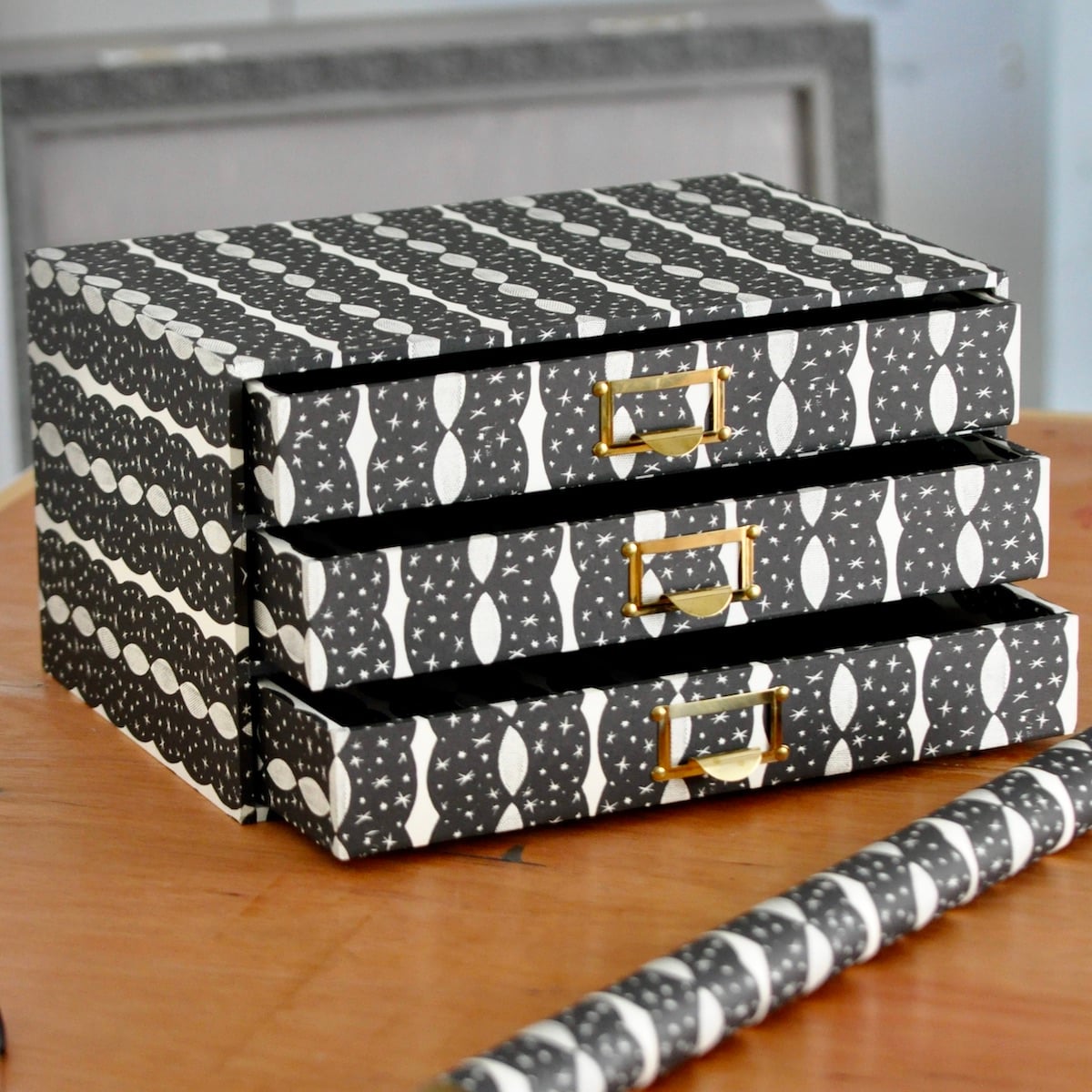
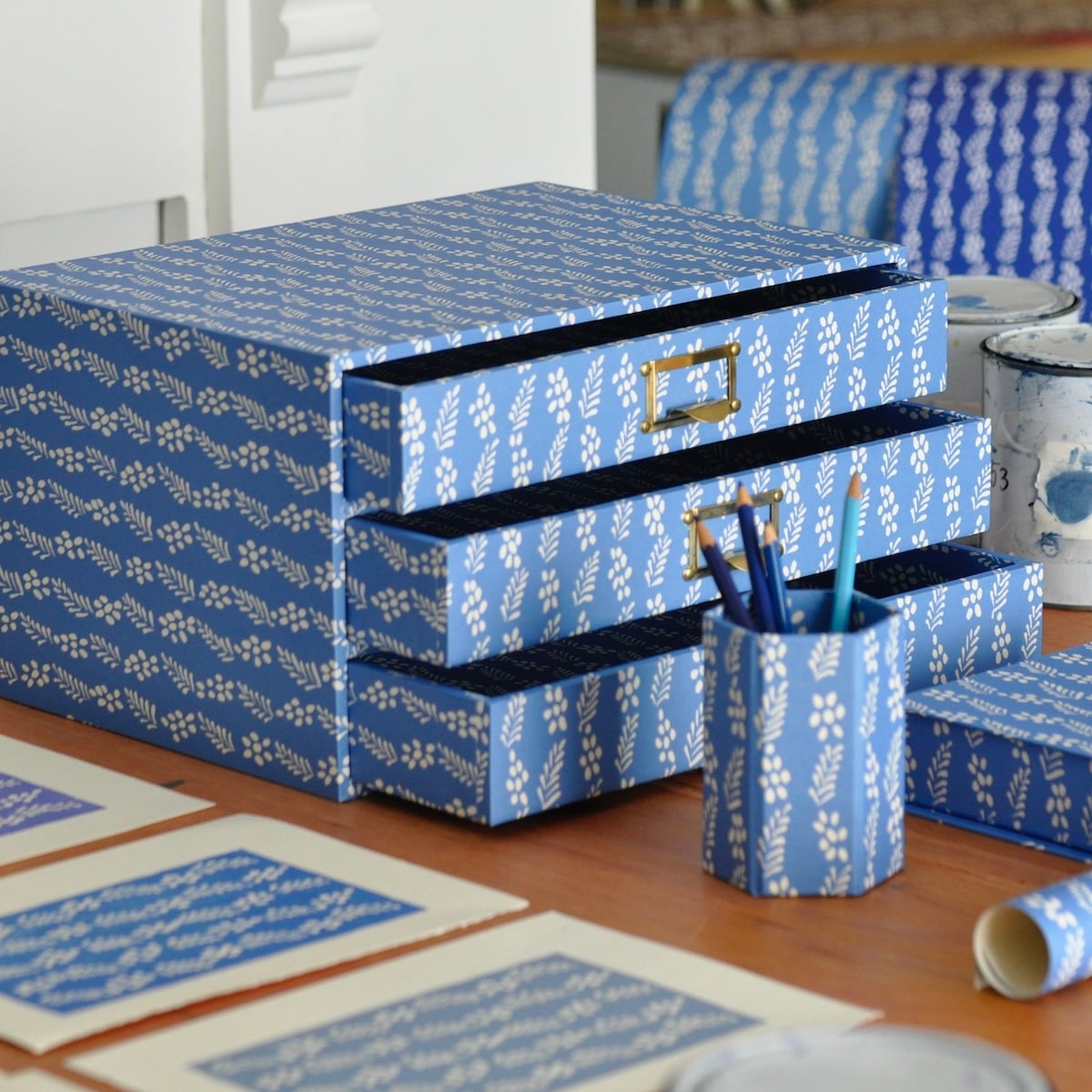
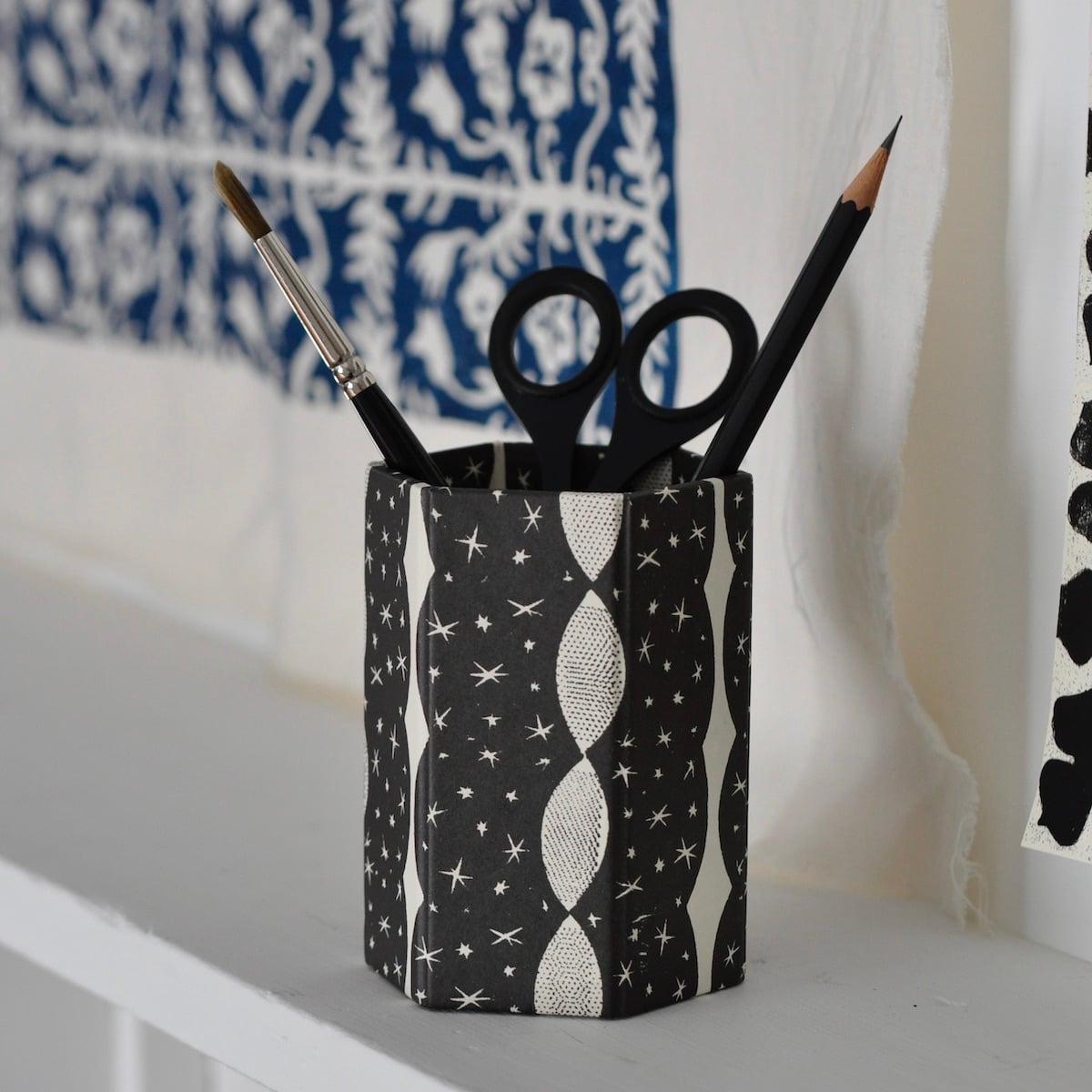
The Pattern of Life: Enid Marx and Modern British Design opens this Saturday, July 18th: do visit. We’ll certainly be going back ourselves to see the famous chaise longue in the flesh. The patterned papers we have made from Marx’s textile designs are printed now: we’re calling them Chaise Longue and Neck Tie. (The chaise longue textile was named ‘Fairy and Stipple’ by Marx: the neck tie textile has no known name.) Notebooks, boxes and pencil pots, and a few — but only a very few, mind you — of our Collector’s Drawers, all covered with those papers, plus sheets of the papers themselves—useful for so many decorative purposes—are on sale now, but only in the Compton Verney shop and here on our website.